Lawmakers Tell Banks to Hold Russian Diesel Deals
A bipartisan group of legislators sent letters to major US financial institutions and port authorities, warning them that processing Russian diesel imports could lead to legal liability under current federal statutes.
By Isabel Ortega ·
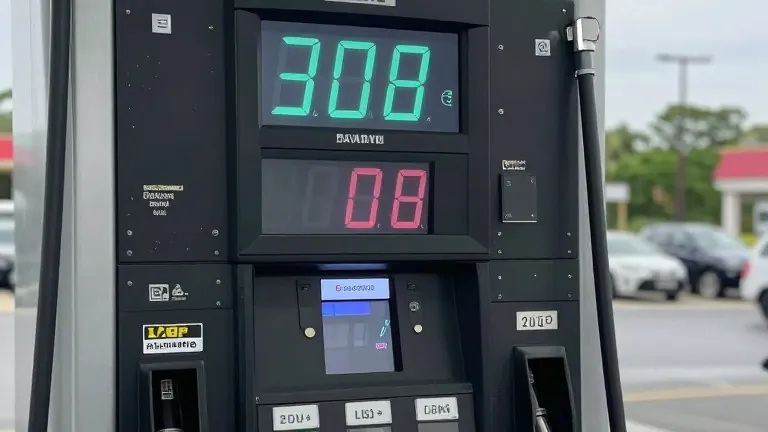
A bipartisan group of US lawmakers sent letters to the chief executives of major American banks and several port authorities, warning them against facilitating imports of Russian diesel. The legislators stated that these transactions could violate federal law and expose companies to both civil and criminal liability. The correspondence marks a new front in the legal and political dispute over the administration's recent easing of sanctions on Russian energy products.
The letters were sent in response to an agreement announced by President Donald Trump on October 9. Under the deal, Moscow agreed to supply hundreds of thousands of metric tons of diesel to the United States. The US Treasury Department followed up by issuing General License 135, which grants a six-month exemption from specific sanctions restrictions. Russia confirmed the arrangement shortly after the presidential announcement.
The group of legislators includes Democratic Senators Jeanne Shaheen, Ron Wyden, Sheldon Whitehouse, Chris Coons, and Elizabeth Warren. They were joined by outgoing Republican Senator Thom Tillis and Representative Gregory Meeks, who serves as the top Democrat on the House Foreign Affairs Committee. In their letters, the lawmakers urged companies not to facilitate the purchase, transportation, importation, unloading, storage, financing, or distribution of Russian-origin diesel until all legal requirements were met.
Recipients of the letters were instructed to preserve records of any proposed or completed transactions. This includes contracts, shipping documents, payment records, port reservations, and communications with suppliers or US government officials dating back to September 1. The lawmakers requested confirmation by October 28 that these preservation measures were implemented and asked for disclosure of any knowledge regarding actual or proposed imports.
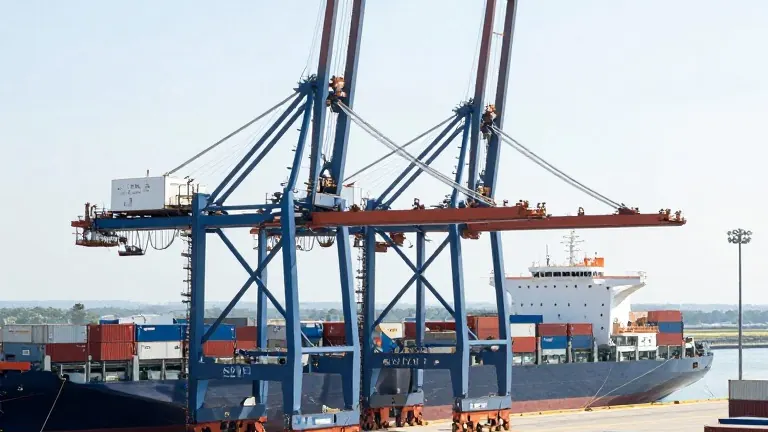
The letters went to the heads of major financial institutions, including Goldman Sachs, as well as port authorities in Houston, Corpus Christi, and Beaumont in Texas, and in New York and New Jersey. Vessel-tracking data cited by the lawmakers indicates that ships carrying Russian diesel could arrive at Beaumont and New York or New Jersey as early as the end of October.
The legal dispute centers on whether the administration's licensing action aligns with restrictions set by Congress. The lawmakers pointed to the Ending Importation of Russian Oil Act of 2022. This law generally prohibits imports of Russian energy products unless the president certifies to Congress that Russia has ceased military hostilities in Ukraine and poses no immediate threat to NATO members. They also cited Section 216 of the Countering America’s Adversaries Through Sanctions Act, arguing that the administration failed to seek required congressional review.
The administration maintains that its action is lawful and consistent with previous decisions by the Treasury Department’s Office of Foreign Assets Control. White House spokesperson Taylor Rogers dismissed the initiative as politically motivated. "The Democrats are already telegraphing that, once again, they have no agenda to improve the lives of Americans and will instead continue their decade-long obsession with investigating President Trump," Rogers said.
Representative Jamie Raskin, the top Democrat on the House Judiciary Committee, separately warned fuel-industry associations that companies could face penalties of up to 20 years in prison. He argued that Trump’s move could not override statutory prohibitions and warned that companies could be held accountable whether in the current administration or the next. Michael Wain, a senior international trade policy adviser at Akin, noted that the license reduces US sanctions risk for foreign firms but that companies must still consider British and European Union rules.
Glen Howard, president of the Saratoga Foundation, said the letters would likely cause major banks to freeze efforts to proceed with the sale. He suggested the administration failed to adequately consider the deal's legal obstacles. Rachel Ziemba, a senior fellow at the Center for a New American Security, stated that the warnings reinforce her view that most Russian diesel cargoes will be sold outside the United States. She described the situation as mostly diplomatic theater.
Trump stated that Moscow would initially deliver more than 300,000 metric tons of diesel. He said another 500,000 tons would arrive in November, followed by a further 1 million tons. Russia could supply an additional 3 million tons depending on refinery conditions. Industry sources reported that Russian diesel production fell from about 175,000 tons a day in September to 160,000 tons a day in early October, before recovering toward 180,000 tons a day after new export quotas were introduced.
Source: RFE/RL
More Business · Bad Business · Report a business · Got a Story?