Israelis cast ballots to decide fate of Netanyahu in war-worn election
Over 7 million eligible voters participated in Tuesday's national election, with early turnout figures setting records as the country remains divided over security and leadership.
By Naomi Bennett ·
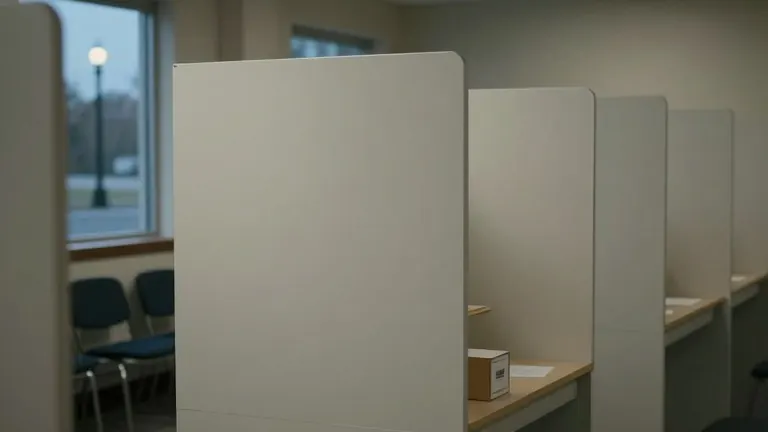
Prime Minister Benjamin Netanyahu faced a decisive test in power as Israelis voted Tuesday in an election held during an ongoing conflict. The vote determines whether the longest-serving premier in the country's history will retain his position or be replaced by a rival coalition. More than 7 million people were eligible to cast ballots, and tens of thousands traveled from overseas to participate in the process.
Early results indicated a surge in voter engagement. According to the Central Elections Committee, nearly 17% of eligible voters cast their ballots in the first three hours. This figure represented the highest turnout by that time since 1981. The Central Elections Committee's acting director-general, Dean Livne, stated that reports of irregularities at polling stations were much lower than in previous elections, despite a complaint filed by Gadi Eisenkot's Yashar party regarding damaged ballot slips.
The race pits Netanyahu against former military chief Gadi Eisenkot, with opinion polls suggesting a tight contest. Israel's fragmented parliamentary system requires parties to form coalitions to secure a majority. Analysts noted that neither Netanyahu's religious and ultranationalist bloc nor the opposition group may have enough support to govern alone, potentially leading to weeks of negotiations. Arab-led parties, including the Ra'am party, could act as kingmakers if they agree to support one side. Mansour Abbas, head of Ra'am, said his party hoped for turnout surpassing 70% in Arab communities and stated, “Our vote will change the government.”
Tensions with Iran hovered over the voting day. Netanyahu released a video this week standing next to a missile-defense battery, warning Tehran of a “devastating blow” if it attacked Israel. In Tel Aviv, families of victims and former hostages held a moment of silence before polls opened. Yona Adam, whose daughter Mapal Adam was killed on Oct. 7, 2023, urged voters to “Remember all those whose voices are no more.”
The election marks the first national vote since the Oct. 7, 2023, Hamas attack that triggered the war in Gaza. Around 330,000 young Israelis, many facing compulsory military service, voted for the first time. Eisenkot visited communities attacked on Oct. 7 early Tuesday, criticizing the current government for not starting the morning in those areas. Far-right national security minister Itamar Ben-Gvir warned that if Netanyahu and allies do not win, it will be a government led by Mansour Abbas.
The vote also addresses deep divisions over the state's character. Supporters view Netanyahu as a steady hand who has guided Israel through multiple wars, while detractors accuse him of prolonging the conflict for political reasons. Opponents of Netanyahu's coalition, including Eisenkot's potential partners, have vowed to improve Israel's international standing, conscript ultra-Orthodox men, and bolster judicial independence. In Jaffa, voter Nisso Shitrit described the election as a question of who serves and who evades service in building the country.
Source: KNBC · original report published
More News · Los Angeles news · Report a business · Got a Story?