Federal appeals court leaves 20,000 California ballots in play for now
A 9th Circuit panel ruled Monday that it was too early to stop the state from counting disputed votes, setting up a new hearing Tuesday.
By Isabel Ortega ·
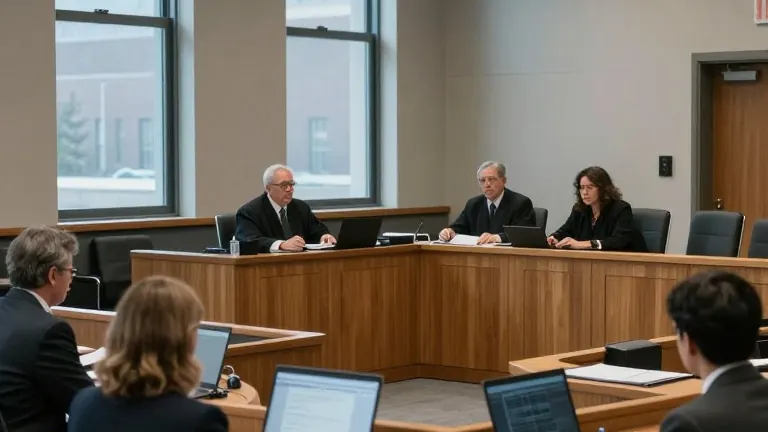
Approximately 20,000 ballots in California remain eligible for counting after a federal appeals court declined to block the state from including them in the Nov. 3 election totals. The 9th Circuit Court of Appeals issued a 2-1 decision on Monday, rejecting the Trump administration's emergency request to stop the state from processing these specific votes. The ruling sends the dispute back to a federal district judge in Southern California, who is scheduled to hear arguments on the matter at 1 p.m. Tuesday.
The legal battle centers on a list of 20,000 names that the U.S. Department of Justice alleges belong to likely noncitizen voters. In mid-October, the Republican administration sued California election officials, arguing that the state failed to review the list within a 48-hour deadline. The federal government sought a court order to sequester those ballots until immigration status checks were completed. California officials disputed the accuracy of the federal list, noting that a random sample of the identified individuals appeared to have been born in the United States.
Judge Gabriel Sanchez, appointed by President Joe Biden, wrote that the federal government's claim of a time-sensitive emergency was partly created by its own filing schedule. The court noted that the administration filed its initial request only after votes had already begun to be counted. Sanchez stated that the government was delayed in recognizing that California state law governs ballot issuance and that the state processes millions of votes on a specific schedule. He argued that setting aside ballots at this late stage would transform election rules for an already underway process.
Judge Mark J. Bennett, a Trump appointee, concurred in the result, stating that the federal government's arguments lacked support under the Constitution. He wrote that the administration appeared to have no power to force California to separate the ballots. Both judges expressed concern that removing the votes could lead to disenfranchising citizens, describing the move as a risk to electoral stability.
Judge Patrick Bumatay, also appointed by Trump, dissented from the ruling. He argued that federal law bars noncitizens from voting and requires California to vet potentially illegal ballots before counting them. Bumatay wrote that stopping the practice for identified individuals was the minimum requirement to prevent illegal voting. He maintained that the federal government has an interest in stopping these votes in the first place, rather than prosecuting voters after the election.
California Attorney General Rob Bonta, a Democrat, called the ruling a welcome speed bump against the administration's attacks on the Constitution. In a public statement, Bonta urged voters to cast their ballots early and participate in the democratic process. He described the federal efforts as disgusting attacks on the country's democracy. The attorney general's office did not provide further comment on the specific legal strategies for the upcoming hearing.
The decision marks the latest legal setback for the Trump administration as it seeks to assert federal control over state-run elections. Noncitizen voting has been a central theme in the president's political messaging for years. Data indicates that noncitizen voting is rare, but the Justice Department contends that keeping potentially illegal ballots in the count carries its own risks. The Justice Department and the U.S. Attorney's Office in the Central District of California did not immediately respond to requests for comment on Monday.
The case will return to the district court level on Tuesday. The federal judge will determine whether to grant the emergency relief requested by the administration. A ruling is needed quickly to determine whether the state must sequester the 20,000 disputed ballots before the Nov. 3 election date.
Source: KPCC · original report published
More News · Los Angeles news · Report a business · Got a Story?