U.S. Presses Mexico on Joint Cartel Ops
Days before the midterms, Washington seeks deeper cooperation in Mexico to boost its anti-narcotics record.
By Isabel Ortega ·
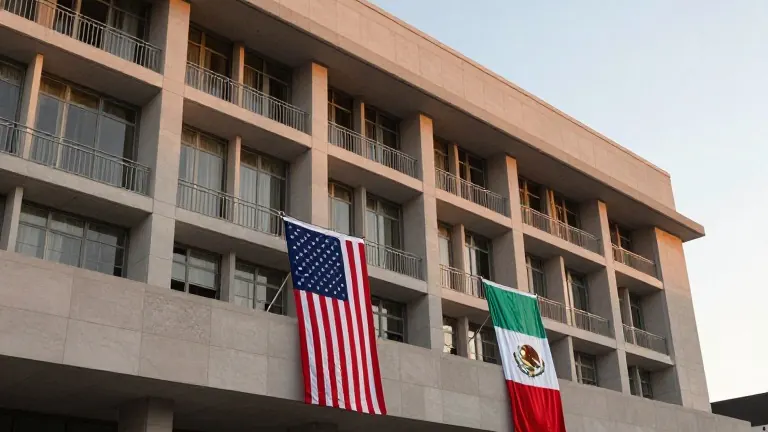
Washington is pressing Mexico to allow American personnel to accompany operations against drug cartels on Mexican soil. The push comes just days before the November 3 midterm elections in the United States. A report from The New York Times noted that the U.S. government is pushing for expanded cooperation. The goal is to secure visible results before voters head to the polls.
The administration faces pressure from the Iran conflict, which has raised fuel prices and complicated the political landscape for Republicans. Reuters documented the electoral cost of that foreign policy. By turning attention to the cartels, the White House can point to an external enemy and demonstrate military strength. This strategy aims to recover political initiative ahead of the election.
The language of narcoterrorism supports this approach. It allows officials to claim that exceptional measures are necessary. It also makes it difficult to question a direct U.S. role. Those who object to the intervention risk being accused of protecting criminals. The debate often shifts from the limits of cooperation to the need to show obedience to a threat defined in Washington.
U.S. domestic distribution networks receive less attention in presidential discourse. The Government Accountability Office acknowledges that distribution networks linked to Mexican organizations operate inside the United States. These networks handle transport, storage, and sales. Yet the focus remains on stopping production and trafficking at the border. Questions persist about why internal persistence does not generate comparable political demands.
Mexican officials have collaborated extensively with U.S. drug policy under tariff pressures and intervention threats. Marco Rubio acknowledged that the cooperation has been exceptional. However, the demands continue to increase. The Mexican government must explain the specific commitments it has acquired and the concrete benefits its population receives from these arrangements.
Dr. Guadalupe Correa-Cabrera, a professor at George Mason University's Schar School of Policy and Government, notes that the urgency is tied to the electoral calendar. She argues that Mexico must clarify its limits and ensure its security policy responds to local needs. The administration seeks a victory to exhibit to voters, while Mexico bears the costs of operations whose priorities are decided abroad.
Source: La Opinión · original report published
More News · Los Angeles news · Report a business · Got a Story?