Voyager 1 hits 16-billion-mile mark from Earth
NASA’s oldest active probe crosses the one-light-day threshold this week, a record no other human-made object has reached.
By Isabel Ortega ·
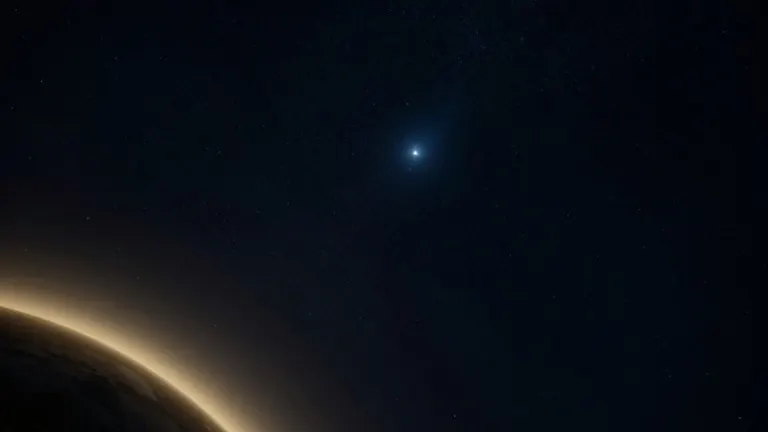
NASA’s Voyager 1 spacecraft will reach a distance of 16 billion miles from Earth on Wednesday. That milestone marks one light day, meaning it will take exactly 24 hours for a radio command sent from the Jet Propulsion Laboratory in Pasadena to reach the probe.
No other human-made object has traveled this far. Voyager 1 launched in 1977 and remains the farthest operating mission in NASA’s history. It is also the longest-operating computer ever built, still running after nearly five decades in space.
The spacecraft continues to transmit daily measurements of magnetic fields, plasma density, and cosmic rays using its remaining operational instruments. Project manager Suzanne Dodd noted that there is very little light where Voyager is located, which is why the cameras were turned off in 1990 to conserve energy.
NASA has invited the public to join a worldwide celebration starting after sunset on Tuesday. The event encourages people to create a symbolic wave of golden light around Earth by flashing the spacecraft’s call sign, “VGR,” in Morse code.
Participants can use smartphones or tablets through a website created by NASA to flash the signal. A standard flashlight works as well. The golden light is intended to mark the occasion as the probe deepens its journey into interstellar space.
The probe’s signal strength has weakened over the years, but engineers continue to monitor its status closely. The one-light-day mark serves as a benchmark for the mission’s longevity and its ability to return data from a region of the solar system previously considered out of reach for operational hardware.
More News · Los Angeles news · Report a business · Got a Story?